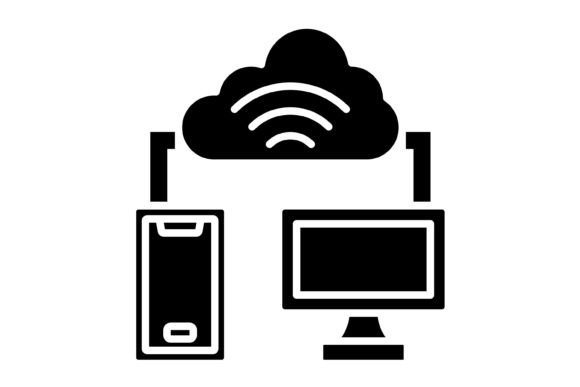
Mastering the Wifi Connection Glyph Icon
In the world of digital interface design, clarity is currency. We often obsess over the perfect sans serif font for body text or the ideal script font for a wedding invitation, but the smaller elements—the icons—often determine whether a user stays or leaves. Today, I want to talk about a specific asset that has saved me hours of work: the Wifi Connection Glyph Icon. It isn't just a picture of radio waves; it is a meticulously crafted piece of modern typography and vector art designed to communicate connectivity instantly.
When you first look at this icon, you see the familiar concentric arcs radiating from a singular point. However, as a designer, I look at the negative space and the weight of the strokes. This specific glyph is designed with "maximum usability" in mind, meaning it doesn't just look good on a high-res retina screen; it holds its own on low-res printouts or small mobile footers. It possesses a clean, technical personality without feeling cold. It strikes that difficult balance between being professional enough for corporate web design and friendly enough for a casual mobile app. If you are building a brand identity for a tech startup or a coffee shop offering free internet, this icon becomes the silent ambassador of that service.
Practical Versatility: From Mobile Apps to Print
One of the biggest headaches in design is asset management. You download a resource, only to find it is a flat JPG that pixelates the moment you try to scale it. That is where the value of this package truly lies. The Wifi Connection Glyph Icon is 100% vector-based. This means you can scale it from the size of a favicon on a browser tab to the side of a billboard without losing a single ounce of quality.
The file formats included in the zip file—AI, EPS, JPG, PNG (Transparent Background), and SVG—cover every possible use case you might encounter.
- AI and EPS: These are your master files. If you are working in Adobe Illustrator for logo design or complex packaging design, these formats allow you to deconstruct the icon, change the stroke weights, or alter the colors to match a specific hex code in your palette.
- SVG: This is the gold standard for web design. SVGs (Scalable Vector Graphics) keep file sizes tiny and load times fast, which is crucial for SEO. They look crisp on any device, regardless of screen resolution.
- PNG (Transparent Background): For those of us creating social media graphics or quick mockups in Canva or Photoshop, the PNG is a lifesaver. The transparent background allows you to drop the icon onto a photograph or a colored background instantly without awkward white boxes.
- JPG: While less flexible than a PNG, the JPG format is universally compatible. It’s perfect for quick email attachments or mood boards where you need to show a concept to a client who might not have design software installed.
Imagine you are a small business owner setting up a physical location. You need to print a sign that says "Free Wifi Available." You can take the AI file, send it to a local print shop for large-format vinyl cutting, and simultaneously use the SVG version for your website’s footer. The consistency between your physical signage and your digital presence reinforces professionalism.
Enhancing User Experience and Visual Hierarchy
Icons are the punctuation marks of editorial design and user interface. A wall of text is intimidating; a page broken up with meaningful icons is inviting. The Wifi Connection Glyph Icon does more than just indicate a signal; it influences how users perceive the reliability of that signal.
In modern typography, we talk a lot about "visual weight." If your primary typeface is a heavy, bold display font, a thin, wispy icon will look lost. Conversely, if you are using a delicate serif font for a luxury magazine layout, a chunky, cartoonish icon will feel out of place. This glyph is designed to be neutral enough to pair with almost any font style. It acts as a perfect companion to a clean sans serif font for a tech blog, or it can sit comfortably next to a premium font in a high-end hotel brochure.
Consider the psychology of the user. When a user opens an app or a website, they scan for familiar patterns. The Wifi glyph is universal. By using a high-quality, crisp version of this icon, you are subconsciously telling the user, "We care about details." It builds trust. If the icon is jagged or poorly designed, the user might wonder if the software or service is equally unpolished.
Smart Implementation for Your Projects
So, how do you actually use this asset effectively? It is not enough to simply paste it onto a canvas. Here is some practical advice based on years of working with design assets.
Evaluating Project Fit
Before you use the icon, ask yourself about the context. Are you designing a presentation for a corporate board meeting? Keep the icon black or dark grey. Are you creating a vibrant illustration for a music festival app? Feel free to apply a gradient or a neon color overlay to the vector paths. The "easy to edit" nature of the file means you shouldn't treat it as a static image, but as a raw material.
Font Pairing Strategies
Icons rarely exist in a vacuum. They are usually accompanied by text labels like "Connect" or "Settings." When pairing this icon with a typeface, pay attention to the x-height and line thickness. If the icon’s strokes are thick, try pairing it with a bold weight of your chosen creative font. If the icon is thin and airy, a light or regular weight will create a harmonious look. This consistency creates a cohesive visual language that makes your templates look professional.
Commercial Licensing and Scalability
For entrepreneurs and content creators, the ability to use assets commercially is vital. Because this icon is included in a standard package designed for wide use, you can confidently use it in client work, merchandise, or digital products. The scalability ensures that whether you are printing a business card or designing a t-shirt, the integrity of the design remains intact.
Ultimately, the Wifi Connection Glyph Icon is a small investment that pays dividends in efficiency and quality. It solves a specific visual problem—how to represent connectivity—while offering the flexibility needed for a wide range of creative and commercial applications. Whether you are a hobbyist scrapbooking your travels or a professional agency building a complex interface, having a reliable, high-quality vector icon in your toolkit makes the design process smoother and the final result sharper.